Deià in the Tramuntana
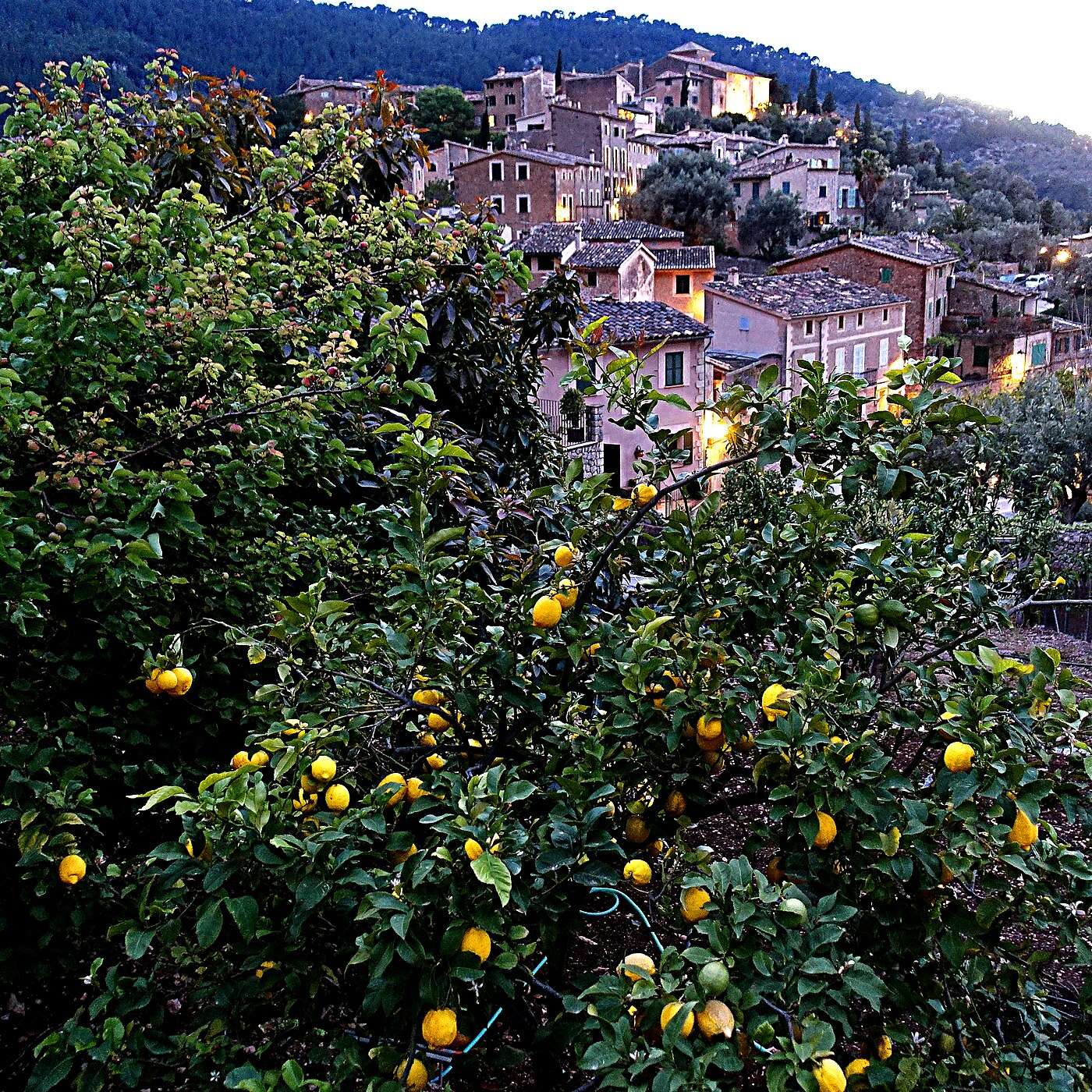
A stone village on a mountain shoulder where Robert Graves wrote for fifty years — lemon terraces above, a stony cove below.
The short version
- TIB buses climb from Palma’s Estació Intermodal over the ridge to Deià in about 45 minutes — routes at tib.org — and the arrival is the show: the village stacked on its hill, the sea beyond, the Teix massif behind.
- Robert Graves settled here in 1929, wrote I, Claudius and most of everything else at the village’s edge, and lies in the hilltop churchyard under a plain concrete slab — his house, Ca n’Alluny, keeps his study as he left it; visits via lacasaderobertgraves.org.
- The village itself is one steep spiral — stone houses, green shutters, bougainvillea — topped by the church and its small cemetery with the Tramuntana’s best casual view. The artists and the prices arrived decades ago; the stone never noticed.
- Cala Deià, a 30-minute walk down the torrent path, is the village’s cove: stones, clear water, fishing huts, and a pair of beach shacks that grill the day’s catch at famous length — swim first, lunch second.
- The Serra de Tramuntana carries UNESCO status for its terraced landscape — the dry-stone walls and lemon groves around Deià are the exhibit, and the old mule path toward Sóller walks straight through it.

Getting there
The TIB bus from Palma’s Estació Intermodal runs the coast road through Valldemossa to Deià in about 45 minutes — frequent in season, sparser off it, and the left-side windows take the sea. Drivers face the village’s small paid lots, which fill by late morning in summer. The stop lands on the main road below the village spiral; everything climbs from there, including you.
The day
Arrive mid-morning and climb the spiral first — lanes, galleries, and the churchyard at the top where Graves’ slab sits among the cypresses with the valley running to the sea. Walk the ten minutes out to Ca n’Alluny for the house tour: the study, the press, the garden terraces where the Claudius novels paid for the groceries. Then down the torrent path to Cala Deià for the swim and the long grilled lunch the cove was designed around. The afternoon climbs back for coffee on a village terrace, or walks a stretch of the old Sóller mule path through the lemon terraces if the legs vote yes. Evening bus over the ridge with the light going gold on the Tramuntana.
When to go
April through June and September through October — walking weather, swimmable cove, and buses still frequent without the July–August crush, when the village and its parking overflow. Winter is quiet and partly shuttered, with the Graves house on reduced days; the terraces and views work year-round for anyone content with a jacket.
Frequently Asked Questions
How do you get from Palma to Deià?
The TIB bus from the Estació Intermodal — about 45 minutes via Valldemossa, frequent in season. Driving is faster but the village lots fill by late morning in summer.
What is the Robert Graves connection?
He moved to Deià in 1929, wrote I, Claudius and five decades of work at Ca n’Alluny on the village edge, and is buried in the hilltop churchyard. The house is kept as he left it and opens for visits.
Is Cala Deià worth the walk down?
Yes — a stony cove with clear Tramuntana water and two famous beach shacks grilling fish at leisurely length. Water shoes help, the climb back is real, and summer afternoons fill it completely.
Can you combine Deià with Valldemossa or Sóller?
The bus string makes Valldemossa an easy add — same line, 15 minutes — while Sóller connects by road or the old mule path for walkers. One village done slowly beats two done breathlessly.
Why is Deià so famous for artists?
Graves anchored it, and decades of writers, painters, and musicians followed — the light, the terraces, and the hill village looks explain the rest. The luxury hotels came later; the stone spiral is unchanged.